

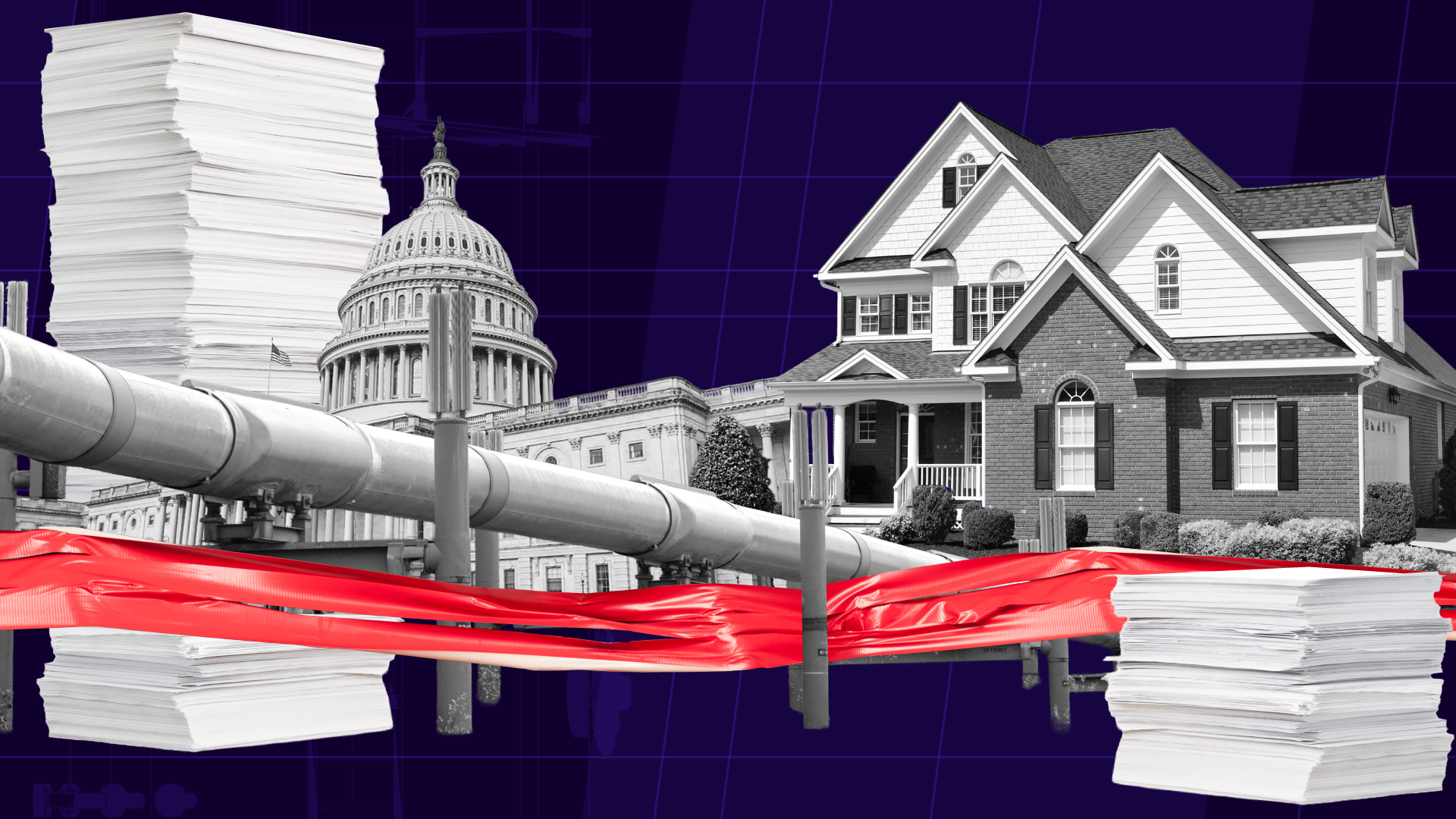
Americans are feeling the impact of higher energy costs, with 83% of American families reporting that their energy bills have increased in recent years. The good news is that we have abundant energy resources here at home to satisfy rapidly growing energy demand and alleviate rising costs. But despite ample supply, bureaucratic bottlenecks and unsuccessful legal challenges are blocking America from the energy that powers it.
These rising costs are not the result of market forces, but a consequence of an outdated permitting system that hasn’t kept pace with America’s growing energy needs. Until Congress passes permitting reform, regulatory delays will continue to obstruct energy infrastructure and economic progress.
The Infrastructure Deficit
Energy demand continues to rise. Since 2013, the demand for natural gas has increased by nearly 50%, yet the infrastructure needed to deliver that energy has only expanded by 26%. The result is a widening gap between supply and delivery – one that puts upward pressure on prices, strains grid reliability, and holds back economic opportunity.
And it’s not just natural gas. Transmission lines, renewable projects, and other critical infrastructure face similar bottlenecks. The same playbook used to stall pipelines can be used to stall all forms of energy development. With electricity demand projected to grow up to 50% by 2040, our infrastructure shortfall will only intensify without lasting policy change.
Today, major energy projects can take an average of 4.5 years to receive federal approval. Many take a decade or more due to legal delays. In fact, National Environmental Policy Act (NEPA) permits face 56% more litigation than they did ten years ago, yet 80% of lawsuits fail.
Those delays create costs and uncertainty. From inflation to financing and litigation, all of it ends up on consumers' bills.
Energy prices continue to rise because political forces have overwhelmed market forces."
– EQT CEO and PAGE Member, Toby Z. Rice
The Real-World Impact
For American consumers, this isn’t about politics or ideology. It affects how people heat their homes and feed their families. According to the EIA, 60% of American homes depend on natural gas for heating, cooking, and laundry. When a permit takes 10 years to approve, it threatens the ability for energy to reach families that depend on it.
Take the Northeast for example. Winter natural gas prices in New York are 26% higher than in Pennsylvania due to limited pipeline access. During peak winter demand, Boston and New York prices can surge 145-160% above the national average.
These regional disparities underscore the urgent need for permitting reform to unlock affordable energy for Americans nationwide. Research suggests that expanding Northeast pipeline capacity alone could generate nationwide consumer savings of up to $76 billion through 2040. However, these savings will only materialize if projects can move forward. Unlocking those projects will not just lower bills but boost our economy. Over $1 trillion in infrastructure investment is currently frozen in the federal permitting process—capital that could be building projects, creating jobs, and lowering costs for voters. The cost of inaction is already staggering: delayed and cancelled projects have eliminated millions of jobs and billions in wages for American workers.
For our members this is not politics: these are paychecks, healthcare, and retirement money… stalling means another day without a paycheck."
– Brent Booker, General President of Laborers' International Union of North America
Meeting the Moment
Americans consistently rank affordability and reliability as their top energy priorities. As we approach the midterm elections in the fall, the clock is ticking for policymakers to act on voters’ rightful energy concerns. With every passing day that permitting issues go unresolved, the cost of living goes up for voters, and candidates may pay the price for their inaction at the ballot box.
At a time when energy demand is rising, economic anxiety is high, and elections have massive consequences, Congress has an opportunity to act quickly on durable, bipartisan permitting reform that that streamlines NEPA reviews, reduces procedural delays and strengthens judicial review, while protecting environmental safeguards. It will unlock 4,000+ miles of already planned pipelines, create new investment and energy jobs, and provide certainty to the energy market, all of which will help deliver more affordable energy to Americans who need it.